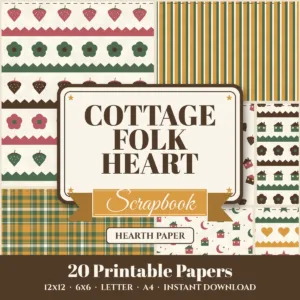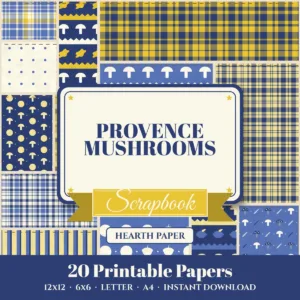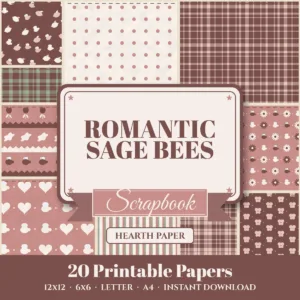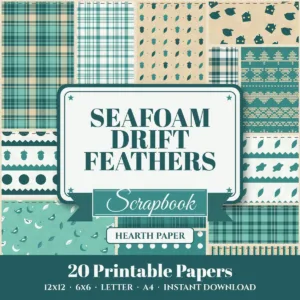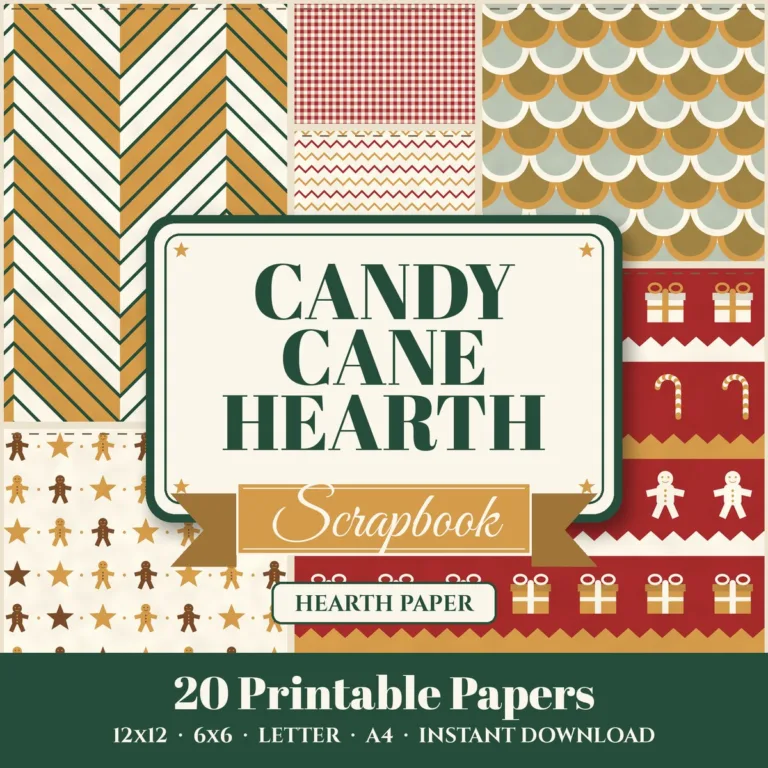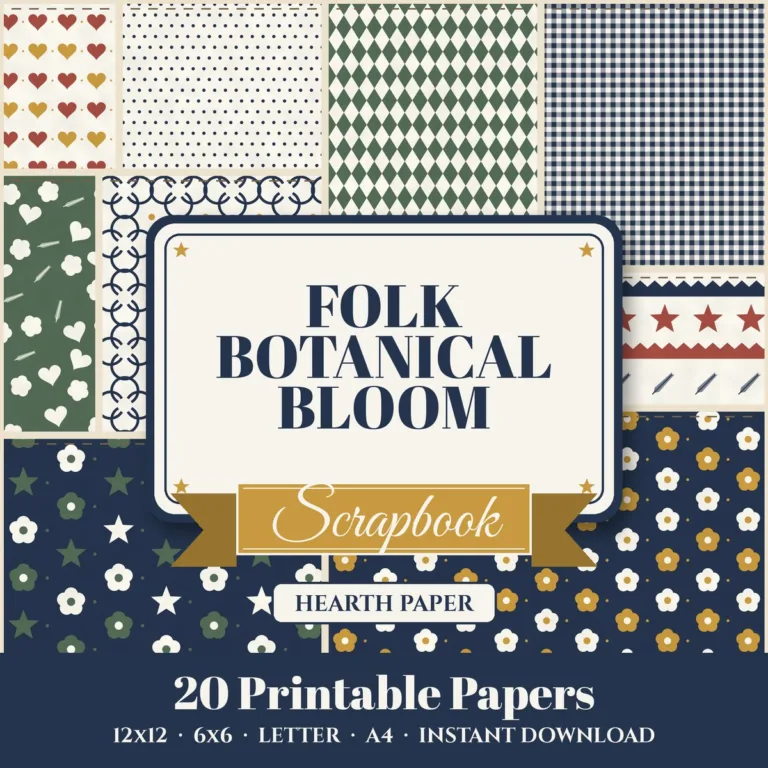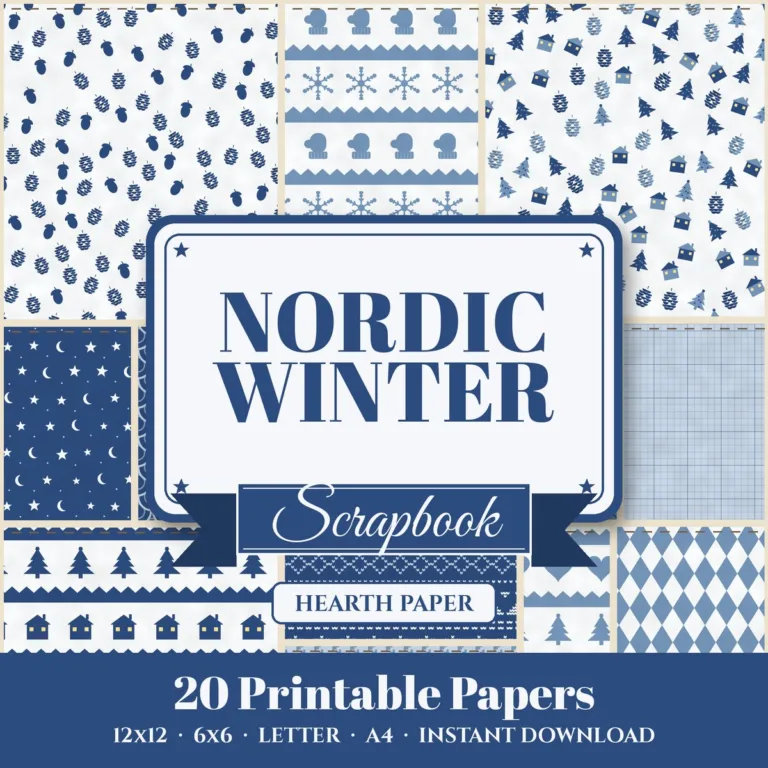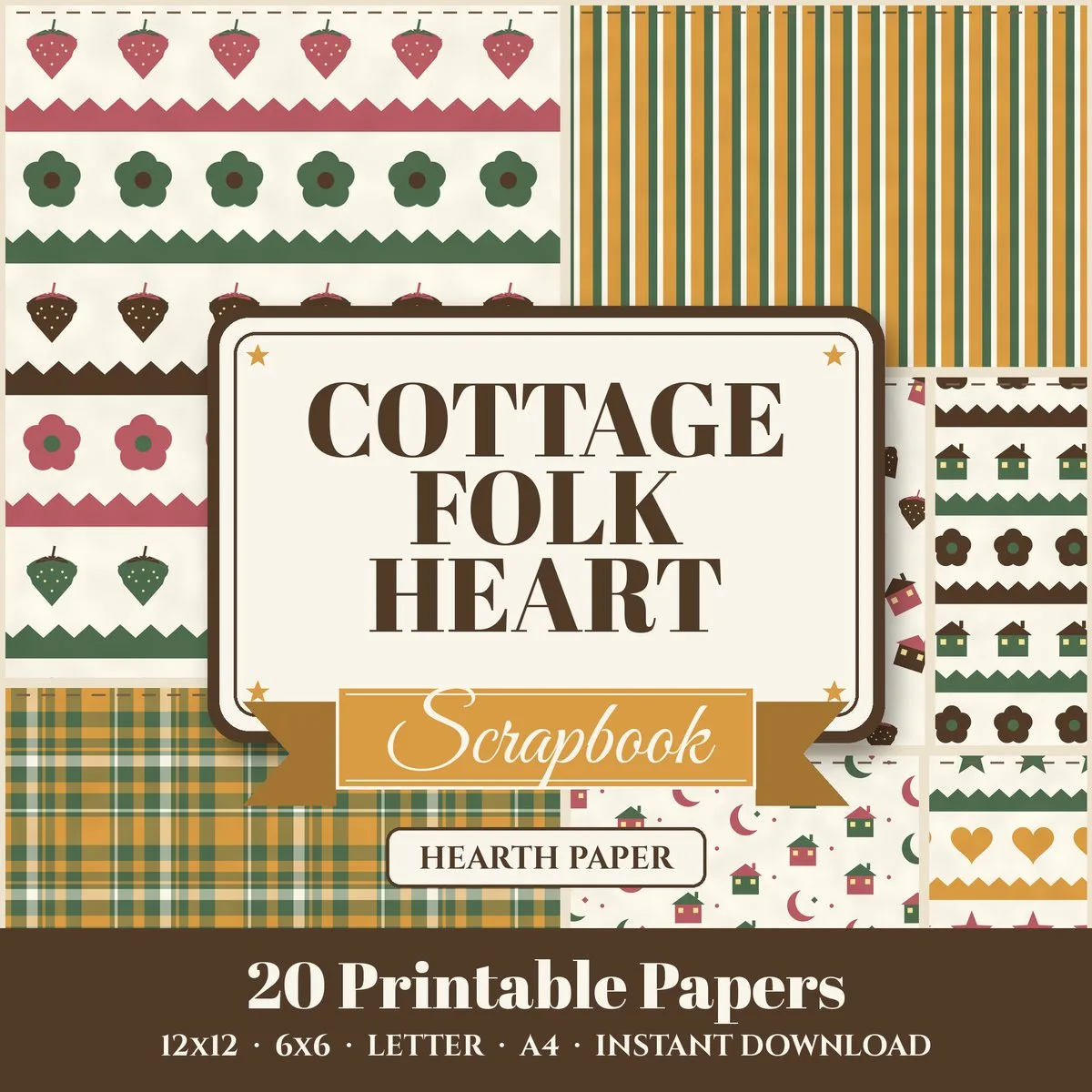
The same pattern can look flat on copy paper and rich on good matte cardstock. Paper is the cheapest upgrade you can make to printed scrapbook paper, and the right choice depends on the project: a card base needs stiffness, gift wrap needs to fold, and decoupage needs to soften under glue. Here is how to choose.
Paper weight, decoded
Paper weight is labeled two ways, and the US “lb” numbers are confusing because text and cover papers are measured differently. Grams per square meter (gsm) is the easiest number to compare.
| Label | About | Feels like | Use it for |
|---|---|---|---|
| 20 to 24 lb text / bond | 75 to 90 gsm | Copy paper | Test prints, decoupage, wrapping small gifts |
| 28 to 32 lb text | 105 to 120 gsm | Premium letter paper | Gift wrap, envelope liners, junk journal pages, folded pockets |
| 65 lb cover | about 176 gsm | Light cardstock | Scrapbook layers, tags, card panels |
| 80 lb cover | about 216 gsm | Medium cardstock | Card bases, sturdy tags, box tops |
| 100 to 110 lb cover | 270 to 300 gsm | Heavy cardstock | Stand-up cards and boxes, only if your printer allows it |
Check your printer manual for its maximum paper weight before you buy a pack of heavy cardstock. Many home inkjets list a limit somewhere around 200 to 300 gsm, and most handle thicker paper better through a rear or manual feed.
Finish: matte, satin or glossy?
- Matte is the closest to traditional patterned paper. No glare, easy to write on, takes glue and ink well. This is our first pick for nearly every project.
- Satin or luster gives a little more color depth with a soft sheen. Nice for album pages you will not write on.
- Glossy photo paper makes colors pop but shows fingerprints, cracks when folded and resists most glues. Save it for framed prints.
Inkjet paper vs plain cardstock
Paper sold for inkjet printers has a coating that keeps ink on the surface, so colors stay bright and lines stay sharp. Uncoated craft cardstock soaks ink in, which makes prints duller and can blur fine motifs. If your cardstock is not labeled for inkjet or laser printing, test one sheet first. Smooth white cardstock almost always prints better than textured or cream stock, which shifts colors.
Best paper by project
- Scrapbook layouts: 65 lb matte cardstock. Stiff enough to hold photos, thin enough to layer.
- Cards: 80 lb cardstock for the base, 65 lb for printed panels. See our card ideas.
- Gift wrap and bags: 28 to 32 lb matte text paper. It folds cleanly without cracking. More in our gift wrap guide.
- Junk journals: a mix. Text weight for pages you will fold into signatures, cardstock for covers and tuck spots.
- Decoupage: the thinnest paper your printer handles well, ideally a laser print. Thin paper conforms to curves and hides its edges.
- Tags and bookmarks: 80 lb cardstock so they survive handling.
Color: why white matters
Printers do not print white ink, so the paper color becomes part of every light area in the design. White paper shows the pattern as designed. Cream or kraft paper gives a vintage, warm cast, which can be lovely with folk and farmhouse designs, but it will make blues and pinks look muddy. Do one test print and decide.
Our recommendation
If you only buy one paper, make it a smooth white matte cardstock around 65 lb (about 176 gsm) that is labeled for your printer type. It covers layouts, cards and tags, and it shows patterns the way they were designed. Then pick up a ream of 32 lb matte paper for anything that needs to fold. For printer settings, see how to print digital scrapbook paper at home.